While Iowa is not known for many things, it is known for its high production rate of agricultural goods like corn, soybeans, pork, and ethanol. Over 84 percent of Iowa’s total land is used for agriculture. These levels of farm production have recently been linked to another one of Iowa’s staples: its concerningly high cancer rates.
According to the National Cancer Institute, Iowa has the third highest cancer incidence (new cancer) rate in the nation, only behind Kentucky and West Virginia. Iowa is additionally one of three states to have a rising cancer rate.
The cancer rates in Kentucky and West Virginia are primarily high in the Appalachia region, which experiences healthcare disparities and high levels of poverty due to its rurality. The local coal mining industry also plays a role, as it exposes workers to hazardous carcinogens.
Similarly to the way Appalachia’s coal industry exposes citizens and workers to dangerous chemicals, Iowa’s agricultural industry infiltrates our soil with harmful pesticides and nitrates that have been linked to cancer.
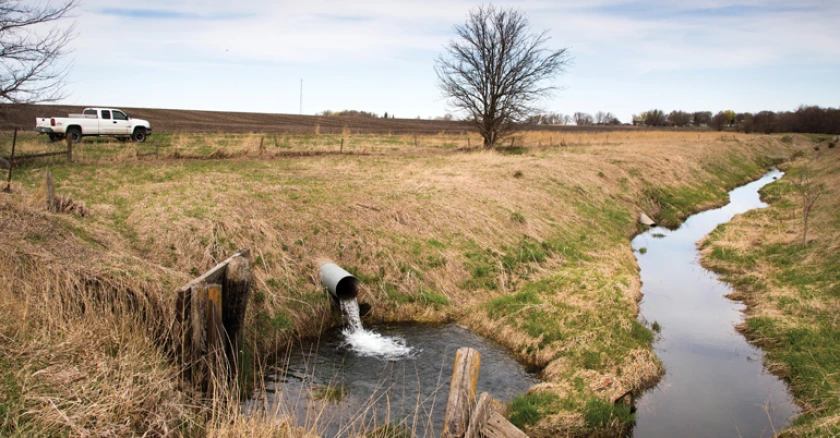
When farmers grow crops, they spray their fields with chemicals designed to keep insects or other dangers to their crop health away. These chemicals seep into farmland soil, and are then carried to drinking water sources by rain or snowmelt.
Nitrates, a compound of nitrogen and oxygen, are healthy for the human body at low levels, but become dangerous in excess. In drinking water concentrations, the level recognized as healthy is 10mg/L of nitrates or less. In the summer of 2025, the Raccoon and Des Moines rivers were consistently reporting nitrate levels of 14mg/L or higher. The majority of these nitrates can be sourced back to agricultural runoff.
To combat these nitrate levels, Central Iowa Water Works issued its first ever lawn watering ban on June 12th, 2025. The ban helped Water Works get their treatment facilities under control, and was lifted in early August. However, nitrate removal facilities have still been working overtime.
Nitrate levels in rivers are often higher in the spring and summer, due to the increased amount of rainfall pushing runoff into the waters. Central Iowa Water Works had to turn on their nitrate removal facilities in January of this year, and they have been running consistently since, besides a brief six day pause in March. This is highly unusual for this time of year.
While CIWW is required to purify drinking water until it meets the standards set by the Environmental Protection Agency, that is not the case for all Iowa water sources.
Private wells, which serve seven percent of Iowa’s population, have no federal or state regulations requiring regular testing for nitrates or other pollutants. It is recommended that wells are checked for chemical pollutants once a year, but this doesn’t always end up happening.
So, what does Iowa’s water pollution have to do with its cancer rate?
The ingestion of excess nitrates has been directly linked to the increased chance to develop colorectal, thyroid, and stomach cancers. Atrazine, another chemical commonly found in pesticides, has been known to cause aggressive cancers of the prostate, lung, and breast. According to the National Cancer Institute, Iowa ranked among the top fifteen states for each of the aforementioned cancer types in 2022.
To reduce these high cancer rates, the Iowa government recently passed a $209 million dollar bill funding the Rural Health Transformation Program. This program is aimed to make healthcare more accessible within rural areas, which will help detect cancer earlier in rural patients. The earlier cancer is detected, the higher the survivability rate is.
Additionally, there is near constant cancer research happening inside the University of Iowa’s medical labs. Researchers are currently working on a $1 million dollar cancer research initiative set to conclude in June of this year.
However, these initiatives are two of the few directions of funds towards lowering the cancer risk within the state of Iowa. In April, Iowa’s congress restricted access to the HPV (Human Papillomavirus) vaccine for minors, a preventative vaccine for cancers in the reproductive organs. Iowa is also one of only six states to have unrestricted tanning bed access for minors, a potential cause of Melanoma (skin cancer). The chemical Atrazine is banned in over sixty countries for its harmful potential, yet Iowa has done nothing to control its agricultural usage.
As Iowa cancer rates continue to increase, so does the public watch on the state’s water pollution and legislative policies.