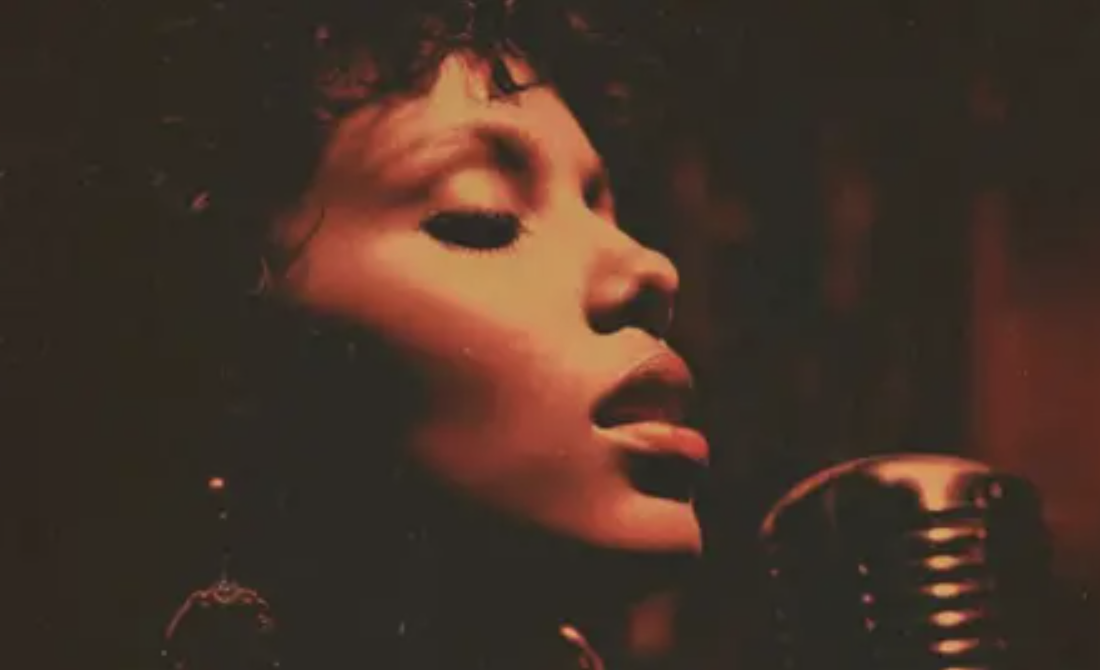
If you like to stay up to date in the current R&B music scene, you might have heard of this year’s newest rising star, Sienna Rose. She debuted her musical career in late 2025, and quickly skyrocketed to have over five million monthly listeners on Spotify and multiple songs in Spotify’s Viral 50 playlist by early February.
As fans of Rose naturally wanted to learn more about their favorite up and coming artist, they were met with a suspicious lack of a digital footprint or presence in pop culture. Rose has no social media profiles, has never performed a live show, and has no recorded interviews. Fans then realized that she had released an unusual amount of music—45 songs—in less than four months.
There was only one thing that could explain Rose’s abnormal behavior and the discrepancies in some of her music and album covers: Sienna Rose does not exist. Rose is nothing more than a pseudonym being used to release completely AI-generated music under.
The “artist” who is often compared to the soulful Olivia Dean, this year’s best new artist at the Grammys, only has the soul of a microchip and a mindless prompt typed into software like ChatGPT or Suno AI.
Rose is among the thousands of completely AI-generated “artists” disguised as real humans popping up on streaming platforms daily. Other notable “artists” that have been suspected to be AI-generated include Olivia B Moore (roughly two million monthly listeners), the Velvet Sundown (500k monthly listeners), and Breaking Rust (nearly three million monthly listeners).
One of the biggest problems with these AI “artists” is that the public doesn’t even recognize that they are listening to AI-generated music. The technology used to create artificial music is constantly adapting and improving, so it will only become harder to pick AI music out of a crowd.
The sharp increase in AI-generated music being uploaded to streaming platforms isn’t just affecting the way that consumers listen to music, but is changing the way the entire music industry functions.
Artificial intelligence learns how to generate picture perfect images, videos, or music through a series of intensive training. According to RWS.com, a British technology company centered around the future of AI, “AI training data is a set of information, or inputs, used to teach AI models to make accurate predictions or decisions.”
RWS.com additionally shares that these inputs can range from anything like social media posts to literary works and music. While some of this data is synthetically produced for AI training, a majority of the data is sourced from everyday human activity.
Technically speaking, since there are no current laws against it, any music uploaded on the internet is fair game to be used for AI training. Artists fought for years for copyright protections to be applied to their music, but now their musical ideas and lines can be fed to Artificial Intelligence without them even knowing.
When AI is trained with data, it will continue to replicate the contents of the data over and over again as it generates results. Stolen musical ideas won’t just be recycled once; they will be present in millions of different generated products.
Possible copyright infringement is just one of the many ethical concerns surrounding the use of AI in the music industry. Music was one of the earliest known forms of human connection and expression, and is the backbone of many cultures and religions around the world. It doesn’t feel right for robots to take over something so important to human culture.
Additionally, AI will likely lead to a heavy loss of job opportunities in the industry. Why pay someone to produce your music when AI can do it for free? Why hire a company to promote your music when you can do it yourself with the click of a few buttons on an AI software program? From a business and profit perspective, the answer to these questions is simple.
To protect the centuries old art form, some companies are cracking down on the presence of AI-generated music on their platforms. Earlier this year, Bandcamp was the first major music streaming service to order a ban of AI music from their library. Other platforms like YouTube are requiring that music created with AI must be labeled as so in order to inform their listeners.
If you want to stop the spread of AI music, the best thing you can do is avoid listening to it at all costs. Some of the telltale signs of music being AI-generated include a low buzzing sound in the background of the track, overly perfect vocals missing strain or emotion, or artists that have released multiple albums in a short time span. It can also help to support real artists by going to their concerts or buying physical copies of their albums.
While the future of music might be changing, music will never go away, and humans will never stop making it. Robots will never fully be capable of capturing the emotion, relatability, and creativity that makes music so enjoyable to listen to in the first place. It is up to us to continue consuming music the way we were meant to.